
Leg Types:
Biped vs Quad and What Changes Your Movement
Use RIG Riot leg types as a movement foundation. Compare the observed Biped/Quad tradeoffs without treating random part values as universal facts.



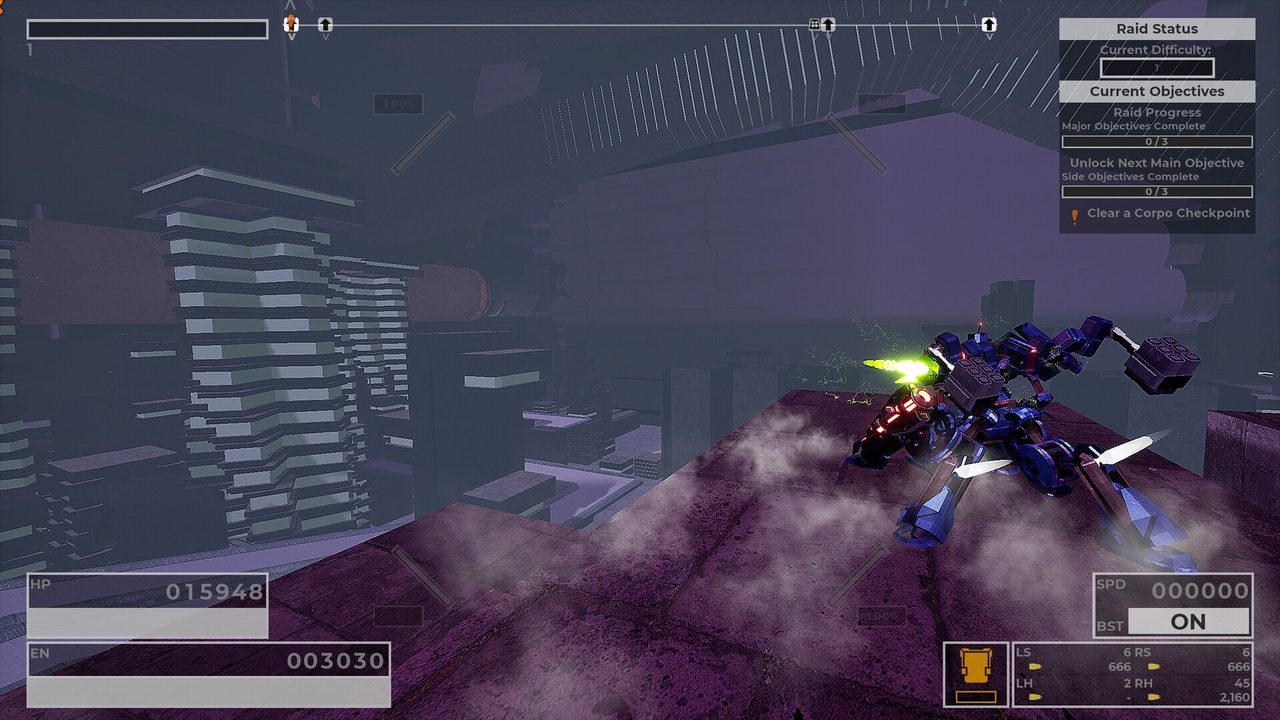
Legs define the movement base
RIG Riot’s July demo update officially added Biped legs and expanded movement/customization systems. Long-form current-demo footage also shows Quad setups with a very different feel. Choose legs by the movement job you want before chasing individual rolled values.
Biped: the clean baseline
Biped is the easiest reference point for learning jump, wall jump, dash and flight interactions without designing around an extreme ground-mobility trade. If you are still learning the map’s verticality, start here.
Quad: observed ground-dash/load bias
In an extended demo run, swapping into Quad legs reduced jump-height and turn comfort while dramatically improving dash behavior and load headroom, alongside resistance gains in that particular part comparison. The important insight is the shape of the trade — not the exact numbers from one rolled part.
Ground authority
Dash performance, heavy-load freedom and a sturdier-feeling platform in the observed build.
Vertical comfort
Jump/turn compromises can make stacked maps harder if the rest of the RIG does not compensate.
Do not publish one player’s stat roll as a universal table
Permanent parts are highly componentized. Use current footage to understand tradeoffs, then check the exact part in your own garage. This page will move to fixed tables only when live-game evidence shows which fields are stable across the relevant part family.